


Translation and Interpreting at the World Cup
Billions of people around the world will be watching their favourite teams compete in football’s biggest competition this summer. But do you know what goes on behind the scenes to keep the World Cup running smoothly from a linguistic perspective?
The 2026 World Cup is due to be the most linguistically diverse World Cup there has ever been. More nations are competing than ever before, and the three separate host nations speak three core languages between them. The 2026 World Cup has 48 nations competing in matches held across stadiums in Canada, Mexico, and the US. With teams, coaching staff, media, and viewers all speaking different languages, smooth communication is vital for the organisation, coaching, and broadcast of the tournament.
From the 13 teams that participated in the first ever World Cup held in Montevideo, Uruguay in 1930, the competition has grown enormously, both in participation and spectatorship. There are now an estimated 5 billion fans of the beautiful game. Originally broadcast through radio, the tournament now involves multiple platforms, with fans eagerly awaiting updates in their own languages.
Language Services Department
The World Cup is run by FIFA, the international governing body for football, which has 211 member associations. To handle communication with members and stakeholders, the organisation has its own Language Services Department. The body has official congress and administrative languages and produces documentation and announcements that are translated into its official languages. This number has grown from 4 official languages, French, English, Spanish, and German, to 7, with the addition of Arabic, Portuguese, and Russian as congress languages before the 2022 competition.
Caitlin Stephens, the Deputy Head of Language Services noted that “FIFA’s translators have to be both good specialists and generalists,”. This is understandable considering that the linguists have to translate text from creative, editorial texts for its magazine, FIFA 1904, to technical handbooks, legal documents, and governance reports.
Localising in the Stadium
To handle the language element of the World Cup and numerous events and meetings that take place in the lead-up, FIFA hires freelance interpreters, and works with various partners and agencies. Beyond the stadium’s playing field we see in person or on TV, stadiums often have a series of spaces designed to host various media, whether for commentary, capturing interviews, or broadcasting.
Many of these spaces surround the Players’ Tunnel, including a “Mixed Zone” and “Flash Interview” area, as well as a Press Conference Room, ready to capture information and insights for potentially billions of eager viewers. With all of these sites designed to share the tournament with global audiences, interpretation is needed in various settings, and services have to be highly coordinated. For the 2026 World Cup, various interpretation management staff will work to oversee the interpreting services, communicating with the various stakeholders including media staff and interpreters, and ensuring operations run smoothly.
Interpreting on the Pitch
Translation also plays a huge part in the games themselves, with referees, coaching staff, and players of diverse languages and nationalities, and diversity within individual clubs themselves. Managers and coaching staff need to be able to communicate strategy and tactics and understand information when managing teams of other nationalities. A prime example is José Mourinho, the renowned football manager, who worked as an assistant and interpreter for English coach Bobby Robson in the early days of his career, gaining the nickname “The Translator”, before going on to become a manager himself. He interpreted for Robson and shared strategy with players, as well as interpreting at press conferences.
For players moving to other nations’ clubs and being non-native speakers, it is important to understand the tactical briefings tailored to the individual matches and opposition, and also to be able to communicate with media during their many media commitments. Clubs may offer language classes, and employ interpreters or multilingual staff to help players transition and excel within their new teams.
So with the World Cup fast approaching, we’ll have the opportunity to see the intersections of cultures and languages in action, and appreciate the work of linguists and services staff to keep communication running smoothly. All of this work behind the scenes is what allows us to enjoy the tournament in all its multinational glory.
If you’d like help sharing your message with an international audience (even if not on the scale of the World Cup!) get in touch with us here!
What The Traitors Teaches Us About Language
The Traitors is a popular murder mystery TV series in which communication is key. The group of either “faithful” or “traitor” players compete to evade murder or banishment and to survive until the end. If they want to stay in the game, the traitors must hide their identity while the faithful must uncover it. If you’ve never met the player before, the main resource you have is communication. Analysing or managing behaviour, body language, and communication is key to strategy.
Tailoring communication is also the aim of localisation. Localisation plays a role in transmitting an identity and in connecting with a specific audience. Positive impressions are important and content needs to adapt to the linguistic and cultural expectations of the market. With communication being so important to The Traitors, it can teach us a lot about language and localisation. Let’s take a look at some of the core communication strategies in the game and how this ties to localisation.
The Importance of Consistency
In The Traitors, players tend to distinguish a person as “authentic” if their character remains consistent. If a player displays a certain character, but this changes abruptly, this immediately marks the person out as suspicious. The lack of consistency calls that person’s authenticity into question.
If a quieter character who previously observed the action begins to voice their opinion more openly, players can become suspicious. Likewise, if players appear bubbly and upbeat, but later become withdrawn, they might be seen as having something to hide. As long as players maintain their temperament throughout the game, they tend to fly further under the radar.
Consistency is also a core aspect of localisation. We need to ensure that the language and terminology we’re using is consistent across content. This is important not only for clarity but also to make sure we’re accurately expressing a company’s identity.
Any inconsistency can undermine either the clarity of the content, or the strength of a company’s unique voice. As a result the customer can struggle to gain a clear sense of the company and their values.
The Impact of a Powerful Argument
At the roundtable, players can present their arguments and try to convince the other players to banish a particular individual. This is where argument comes into play. If a player articulates their theory and backs this up with solid evidence, they can influence the group’s opinion. Nevertheless, asserting a powerful argument can equally draw attention if it appears to be out of character. Players have to choose the right moment and setting.
In localisation, the aim is to express how a good or service can bring value to a customer. A customer can make a considered decision if they have access to information in their own language. That way they have a fuller understanding of what is on offer, the value it can bring, and evidence of this.
Crafting a Compelling Narrative
Another element of communication that has been critical to past players’ success, is the use of storytelling. Crafting a convincing narrative has proved to be an effective way to influence opinion and reach an outcome. This method is especially effective if the narrative becomes a convincing alibi. A traitor that wins a shield and only reveals this to certain individuals incriminates the players believed not to know. In the latest series, a traitor invoked the status of a banished former detective to lend authority to their theories.

Storytelling is also relevant to localisation. Telling a story is important for evoking emotion in the audience. It can help make content feel more relevant and personal. Localisation helps companies tell their own stories in a way that connects with customers in local markets.
Nonverbal Communication
We form impressions in large part from body language, not just verbal speech. In The Traitors, players often become acutely aware of the body language of others. Whether it’s facial expressions, breathing rate, or perspiration, players take note of body language. The direction of a player’s gaze or nervous disposition can equally become fuel for potential theories. Besides body language, outfits can also form a part of strategy. Players can vary their outfits to reflect their aims. Colourful and playful outfits might subtly communicate innocence and trustworthiness, while sharp and formal might communicate seriousness.
n localisation too, it’s not all about the language itself. Translation is one aspect of localisation, but localisation also involves adapting to the cultural reality of the target market. This includes adapting the formatting, layout, currency and units of measurement. It also involves being mindful of local connotations of terms or phrases, and the expectations and preferences of the audience. Ultimately, it is not only language that does the talking, but the overall ensemble of visual and linguistic elements. All together these form an impression and determine whether the content hits the mark or just misses the target.
All in all, The Traitors demonstrates the power of communication, with some important transferable lessons to the world of translation and localisation.
If you’d like to learn more about languages and localisation, you can check out our other blog posts here.
You can get in touch with us via our LinkedIn page to learn how to faithfully communicate with your international customers too!
Meet the Team – Cecily Coates

Hi everyone! I’m Cecily and I’m joining the Web-Translations team as a Project Coordinator.
I have an MA in Specialised Translation from the University of Bologna, Italy, that I completed in 2021.
My journey into languages began after moving to a small village in Northern France when I was 11. Thanks to the welcome of the village and mentorship of my teachers, I became immersed in village life. This gave me an early insight into the value of languages. Despite having been there for only a few months before returning to the UK, the experience was formative. It showed me how learning a language can offer connection, unlock cultures, and broaden your outlook. This triggered an enthusiasm for languages in secondary school, and led me to pursue French and Italian at university.
A highlight of studying languages at university was the opportunity to study the cultures. For example, I learnt about institutions, sporting heroes, and historical events, through the lenses of both literature and cinema. Later, I also took part in study programmes in the Czech Republic and in China, meeting new people and visiting various sites of importance.
The third year of my BA studying abroad was spent as part of the Erasmus+ scheme. I spent my first semester in Réunion Island, learning about the traditions and landscape of the island. This included taking music classes, scuba diving, and spending time hiking the cirques. For my second semester, I studied in Sicily, while also being able to learn more about the rich history and heritage of the island.
When studying in Italy for my MA, I developed a passion for film, taking optional courses in cinema. At this time I also did an internship in subtitling at the Cinema Ritrovato Film Festival in Bologna, helping to make films accessible to international visitors.
Now in my new role as Project Coordinator, I look forward to helping spread ideas and projects across borders!
Outside of work, I love walking and spending time in nature, and have just started out as a volunteer gardener.
Interested in learning more about our team members? Read more Meet the Team blogs here!
Most Valuable Translator Awards 2025
We hope 2026 has started off well for you! As the New Year gets underway, it can only mean one thing… it’s time to announce our Most Valuable Translator Awards 2025!
Every January, we take a moment to show our appreciation for our brilliant linguists by recognising those who have gone above and beyond over the past year. These awards celebrate translators who consistently put in the extra effort and whose hard work never goes unnoticed.
We truly can’t say enough about how much we value all of our freelance translators. You’re always quick to respond, consistently deliver high-quality translations, and are an absolute pleasure to work with. It’s a privilege to collaborate with such a talented community, which makes narrowing it down incredibly difficult. Every one of you brings your best, and we’re genuinely grateful to work with you all — thank you!
That said, the Web-Translations team has been especially impressed by the following group of linguists over the past year. Some have been lifesavers on urgent projects, while others have consistently delivered outstanding work across key client accounts. Their professionalism, communication, and translation expertise truly stand out, and we’d like to extend our sincere thanks for their efforts.
Here are our most Valuable Translators for 2025…
So, please join us in congratulating the following 21 linguists (listed in alphabetical order):
- Ana Cecilia Carromero
- Ángela Arribas Ramírez
- Axel Couton
- Carles Hernandez
- Estelle Dupont-Kendzior
- Eun-Mi Park
- Gisella Giarrusso
- Hanae Matsumura
- Hussam Muhidat
- Ingrid Devanne
- Karolina Dębkowska
- Klaus Urban
- Laura Mussutto
- Marco Ramon
- Marie-Stéphanie Proulx
- Mercedes Acosta
- Nanda Weiland
- Octavian Blenchea
- Pablo Montero Llano
- Sindy Cremer
- Thomas Carlsen
A heartfelt thank you to each and every one of you. We’re excited to continue working with you — and all of our amazing linguists — in the year ahead. Here’s to another great year together, and we’ll see you next January for the next Most Valuable Translator Awards!
Love,
The Web-Translations Team
To see our Most Valuable Translators from 2024, read here!
Celebrating Leeds City of Languages Festival
Next month, Leeds, a city renowned for its diversity and creativity, will host Leeds City of Languages Festival. This festival will be celebrating the rich tapestry of languages and cultures across Yorkshire.
A Celebration of Connection
What began as Leeds Languages Week in 2023 has grown into a city-wide festival now in its third year. It’s led by Bettina Hermoso-Gómez and Sofia Martinho, with support from Professor Emma Cayley and the Arts & Humanities Outreach Team. The festival offers a range of events that bring language to life. From interactive workshops to hands-on learning experiences, the festival provides opportunities for everyone to engage with languages in meaningful ways.
One standout event is the ‘Laterne, Laterne’ Open Day at the German Saturday School Leeds on 8 November. Participants can learn about traditions in Austria, Germany, and Switzerland through a short lantern walk, immersing themselves in the cultural practices that make these regions unique.

Online Events to Explore
For those who cannot make it in person, Leeds City of Languages offers several online and in-person events that bring together educators, students, and language enthusiasts from across the region.
- Languages for All: School Collaborations to Boost A-Level Numbers – 10th November, online.
This interactive webinar explores how schools and universities can work together to encourage more students to take modern languages at A-Level. It features case studies and practical ideas to help strengthen language learning pathways. - An Alphabet Adventure Through Languages and Times – 10th November, online.
Hosted in partnership with the British Library, this online workshop delves into the fascinating history of alphabets and writing systems across cultures. Participants can discover how scripts have evolved and what they reveal about human communication. - Introducing the UK Linguistics Olympiad – 10th November, online.
Designed for teachers, this session provides an introduction to the UK Linguistics Olympiad, a competition that challenges students to solve linguistic puzzles. It offers tips on how to get involved and inspire pupils to explore the science of language.
While many events are online, there are also opportunities to celebrate in person.
One highlight is the Leeds International Film Festival (6–17 November), featuring films in many languages.
The festival is a chance to experience storytelling through different cultures and see how language connects people globally.
A Growing Network
The festival isn’t just about events. It’s about building a community. It brings together schools, universities, cultural organisations, and local businesses across Yorkshire. This helps to cultivate partnerships that celebrate learning, collaboration, and inclusion. Through these collaborations, the festival highlights the role of language in building community and celebrating diversity.
Why It Matters
At Web-Translations, we’re proud to be based in and to represent Leeds, a city that recognises and celebrates the power of language. Initiatives like Leeds City of Languages resonate with us. This festival serves as a reminder that translation and languages are not just about converting words. They’re about conveying meaning, preserving culture, and building bridges between communities and cultures.
If you are interested in exploring how language can connect your organisation with a global audience, get in touch with us to see how we can help your message resonate across cultures.
Autumn Traditions Around the World
Autumn is a season of change. The air turns cooler, colours deepen, and traditions around the world remind us of community and belonging. From harvest festivals to celebrations of light, many cultures mark this season with events that bring people together.
Festivals in East Asia
In China and across East Asia, the Mid-Autumn Festival takes place on the 15th day of the eighth lunar month. This is usually in September or October. Families gather to admire the full moon, light lanterns, and enjoy mooncakes. It is a time of reunion, reflection, and sharing food with loved ones.
A similar focus on family and gratitude can be found in Korea, where Chuseok is observed around the autumn equinox. This three-day holiday brings people back to their hometowns to honour their ancestors and share traditional foods such as songpyeon, a rice cake filled with sweet ingredients.
Traditions in North America
Autumn is also a season for remembrance. In Mexico, Día de los Muertos fills the beginning of November with colour, music, and gatherings that celebrate the lives of loved ones who have passed away. Families build altars decorated with marigolds, enjoy favourite dishes of those they are remembering, and share stories that keep memories alive.

Meanwhile, in Canada and the United States, Thanksgiving centres on gratitude. Though the dates differ, both versions bring families together for a meal, often featuring seasonal produce such as roast turkey, pumpkin, and root vegetables. It is a time to pause, share food, and reflect on the blessings of the year, making it one of the most widely celebrated autumn traditions in North America.
Celebrations in Europe
In Europe, Oktoberfest in Germany is perhaps one of the most widely recognised autumn festivals. First held in Munich in 1810, it has grown into a global symbol of Bavarian culture. Traditional dress, music, food, and drink create a lively celebration that attracts millions of visitors every year.
Shared Themes Across Cultures
While the customs differ, the themes are often the same. Food, family, gratitude, and remembrance all play an important role. For businesses working internationally, being aware of these traditions can help campaigns feel relevant and respectful, and make connections with audiences more meaningful.
If you are planning international campaigns this autumn, contact us to see how we can help your message resonate across cultures.
Language Revival Around the World
Languages are more than just tools for communication. They reflect so much culture, history, and identity. Yet, according to UNESCO, nearly half of the world’s 7,000 languages are at risk of disappearing in the coming decades. As globalisation pushes dominant languages to the forefront, countless indigenous and minority languages face extinction. In response, language revival campaigns from communities and governments around the world are working tirelessly to preserve their threatened languages.

Why Language Revival Matters
When a language dies, it takes with it a unique worldview, oral traditions, ecological knowledge, and cultural expressions. Historical sources in those languages become locked away, and the wealth of knowledge they hold is extremely difficult to uncover again. Language revival is not simply a cultural mission. It’s also a social and political one, and an act of reclaiming identity, dignity, and heritage.
Successful Language Revival Efforts
In New Zealand, the revival of Māori is a powerful example of how community-led efforts and government policy can work together. Since the 1980s, Māori immersion schools (kura kaupapa Māori), broadcasting in Māori, and the official recognition of Māori as a national language have contributed to a growing number of fluent speakers. The phrase “te reo Māori” (the Māori language) has become a symbol of national identity and pride.

It’s estimated that around 30% of New Zealanders speak Māori, and 25% can speak it as a first language. This is thanks to the hard work of campaigners like Hana Te Hemara, who campaigned for active recognition of te reo Māori and for it to be taught in schools across New Zealand. In recent years, there have even been calls to change New Zealand to its Māori name of Aotearoa and start the process of restoring Māori place names for towns and cities.
Similarly, Welsh has seen a resurgence too. Bilingual education, media presence, and government initiatives have significantly increased the number of Welsh speakers. Welsh is now a required subject in English-medium schools, and there are a growing number of schools that teach all subjects in Welsh. Signs on public roads are bilingual, and communications from hospitals and energy providers are available in Welsh. As of the end of September 2024, 27.7% of the population are able to speak Welsh. This is up from a century ago when it was considered endangered. At one point, it was even outlawed when Wales was under English rule. Today, the Welsh Government has a goal of 1 million Welsh speakers by 2050 and is also working towards the revival of more Welsh place names after the change from Brecon Beacons back to the original Welsh name of Bannau Brycheiniog.
Grassroots Movements and Digital Tools
Not all efforts are lucky enough to have government backing. In the US, the Wôpanâak Language Reclamation Project is revitalising the Wôpanâak language, which had not been spoken fluently for over a century. Through community workshops, language classes, and even immersion schools, the project has enabled new generations to speak Wôpanâak once more.
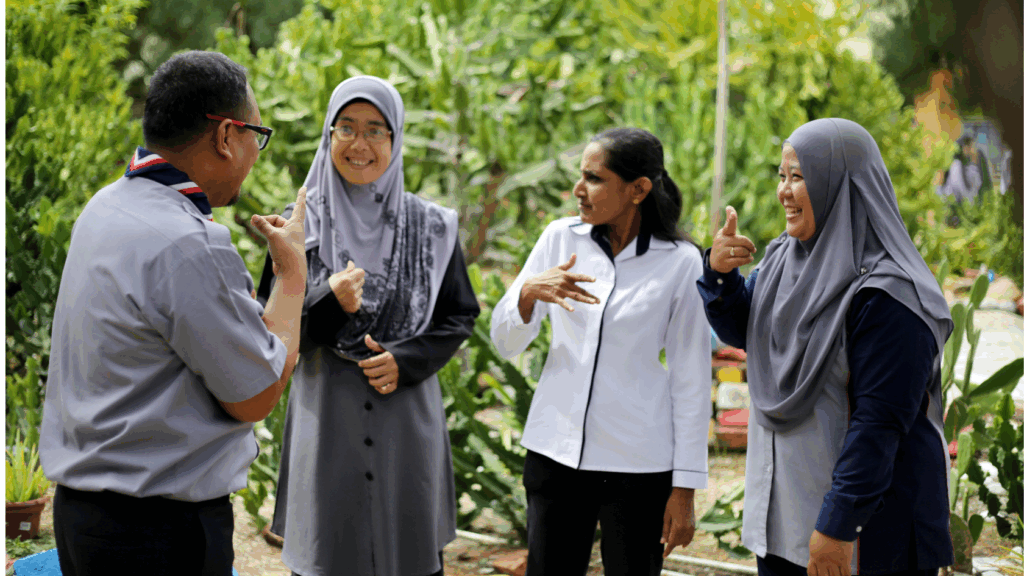
Digital tools are playing an increasing role as well. The Endangered Languages Project, supported by Google and the Alliance for Linguistic Diversity, is an online resource for documenting, sharing, and teaching endangered languages. Even language-learning apps now offer courses in Irish, Hawaiian, Catalan, and Navajo. This means that endangered languages more accessible to more people than ever before.
Challenges Ahead
Despite these successes, language revival remains challenging. It requires long-term commitment, resources, and often a change in societal attitudes. Reviving a language is not simply about teaching vocabulary. It’s about creating environments where the language can be lived and loved daily.
Language revival is a testament to resilience and cultural pride. Whether it’s the revival of Māori in New Zealand or Wôpanâak in the United States, these efforts show that languages on the brink can be brought back and thrive once again. By supporting language preservation and revitalisation initiatives, we help ensure that the world’s linguistic and cultural diversity thrives for generations to come.
Do you want to translate your content into rare languages? Contact our team today! Check out our social media pages for more language-related content as well!
Eurovision 2025 Is Almost Here!
The Eurovision Song Contest 2025 is just around the corner, and we’re ready for a week of music, culture and multilingual celebration!
This year’s final will take place on 17th May at the St. Jakobshalle arena in Basel, Switzerland, with 37 countries competing. From upbeat pop and dramatic ballads to folk influences and experimental staging, Eurovision offers something for everyone – and it’s always a fantastic showcase of creativity and diversity. If you’re as excited as we are, you can check out the entries here!
As language enthusiasts, we’re especially excited to see how artists embrace their native languages. Several entries this year feature lyrics in Spanish, Ukrainian, Serbian, and more. These songs are bringing different cultures to the forefront and proving that music truly is a universal language.
Eurovision is also a reminder of the importance of translation – from live interpretation to subtitles, the contest relies on multilingual communication to reach its global audience.
Whether you watch for the music, the spectacle, or the cultural insight, Eurovision is always a highlight of the year. We’ll definitely be tuning in – will you?
Let the show begin! Who’s your favourite to win? Let us know on our social media pages!
Inspired by the multilingual spirit of Eurovision? Let us help you hit douze points with a perfectly translated website! Contact us! | LinkedIn | X | Facebook
Linguist Spotlight Round-Up
Over the past month, we’ve been shining the linguist spotlight on some of the incredible freelance linguists who make our work possible!
From Mandarin to Friulian, software to fine art, and funny phrases to heartfelt career stories, our linguist spotlights have given us a behind-the-scenes look at the people, languages and lived experiences that shape high-quality translation.
A truly global community
One of the most inspiring things about our freelance network is its diversity. Over the course of one month alone, we heard from linguists based in France, Italy, China, Spain and beyond – each bringing their own cultural insight and linguistic nuance to the table.
Their specialisms ranged from luxury marketing to technical translation, indie games to academic research. And yet, they all shared a deep passion for language, communication and connection.
The paths that brought them here
Every linguist has a story. Echo started out tutoring English before going full-time as a freelance translator (while pregnant with her second child!). Mercedes got her start subtitling films in London. Basel was inspired by his mother’s English teaching, and Laura returned to translation after exploring several other roles.
Whether they stumbled into the profession or pursued it with purpose, one thing’s clear: being a linguist often means carving your own path.
Thoughts on the future
It’s no surprise that AI and machine translation came up more than once. While opinions vary, our contributors agreed on one thing – the future of translation lies in balance. Technology is here to stay, but human creativity, empathy and cultural know-how will always matter, especially in fields where nuance is key.
Favourite phrases and language quirks
We couldn’t wrap up without sharing a few more of our favourite linguistic gems…
- From Arabic: تقبرني (taqburni) – “May you bury me.” A dramatic but affectionate way of saying “I love you so much I can’t bear to live without you.”
- From Spanish: Estar en la edad del pavo – “To be in the turkey age.” A very visual way to describe the awkwardness of adolescence.
- From Chinese: 啊,真香!(ā, zhēn xiāng!) – “Ah, this smells/tastes so good!” A viral expression used when someone ends up loving something they initially refused.
- From Friulian: No varìn migo di lassâsi come cjans? – “Are we really going to part like dogs?” Perfect for persuading your friends to stay for one more drink.
Thank you!
We’re so grateful to all the linguists who took the time to share their stories with us this month. Whether you’re a client, a fellow translator or just curious about languages, we hope you’ve enjoyed getting to know the people behind the words.
Don’t worry if you missed our linguist spotlight posts – you can head over to our LinkedIn to check them out!
We love working with amazing linguists from all over the world. Got a translation project coming up? Contact us – we’d love to work with you!
Linguist Spotlight – 25th April 2025
For our final linguist spotlight post of the month, we’re shining a light on four more of our fantastic freelance linguists: Basel, Laura, Echo, and Mercedes. Working across Arabic, Italian, Chinese, Spanish, and more, their stories remind us of the passion and precision behind great translation. Read on to hear about their career journeys, language tips, and some of their favourite cultural quirks.
Basel
Basel is a talented Arabic linguist who translates both from and into English. His areas of expertise range from fine art and history to social media and marketing. A lifelong language enthusiast, Basel traces the roots of his career back to his mother, an English teacher. “From a young age, I saw her speaking English and thought – I want to do that too. It felt like opening a door to the world.”
When he first moved to France, Basel tackled a new linguistic challenge: French. “When I first arrived, I started listening to podcasts and TV in French, even if I didn’t understand much. With help from my teacher and some personal effort, I now understand almost everything!”
Asked about the future of the industry, Basel sees a hybrid path ahead. “The industry is moving towards more collaboration between human linguists and technology. Machine translation is widely used, but those who want quality content increasingly understand the value of human input.”
Fun facts from Arabic:
- Hard to translate? Popular sayings and socially constructed mottos are very difficult to render well in English.
- Interesting language fact: Arabic uses so many prefixes and suffixes that a single word can form a complete sentence. For example, كتبتها means “I wrote it”.
- Funny phrase: تقبرني (ta’burni), common in the Levant, literally means “may you bury me”, but is actually an affectionate phrase expressing deep love – often from mothers to children.
Laura
Laura is a multilingual translator based in the UK, working mainly between English and Italian, with a soft spot for websites. She also translates from Russian and has a background in German. Her real mother tongue? Friulano – a Romance language spoken in the northeast of Italy. “It’s still my favourite language of all.”
Laura has had an inspiringly flexible career. “I’ve been a translator, interpreter, admin assistant, PA, business analyst… and translator again! I’m proud of being able to adapt to change, try new things, and reinvent myself.”
When it comes to the difference between translation and interpreting, Laura says: “Interpreting is fast-paced and demands quick thinking. You need to be good at letting go – you can’t beat yourself up for not thinking of a better phrasing on the spot. With translation, you have time to research and refine.”
Her advice for language learners? “Expose yourself to the language as much as possible, especially through things you enjoy like films and TV. And once you’re in the country, don’t worry about making a fool of yourself!”
As for the future, Laura offers a thoughtful perspective: “I probably wouldn’t pursue a translation degree in today’s climate. I’d recommend specialising in another field, and adding languages as a valuable extra.”
Fun facts from Italian (and Friulano!):
- Hard to translate? The word simpatico doesn’t quite translate – it means someone who is pleasant, funny, and nice all in one. Russian has a similar word, симпатичный (simpatichnyi), which can mean cute or nice.
- Funny phrase: In Friulian, at the end of a night out, you might say No varìn migo di lassâsi come cjans? – “Are we really going to part like dogs?” It means: one more drink before we go!
Echo
Echo has been a freelance Mandarin and Cantonese translator since 2009, working on everything from luxury branding to government initiatives. Based in China, she’s a native speaker of both Mandarin and Cantonese and specialises in creative, culturally sensitive content.
Her language career began with online tutoring in 2006. “Eventually, I offered editing and translation services too. One client, Dallas, became a regular and kindly introduced me to a whole network of freelance translators. (He’s now known as the brilliant mind behind GT4T!)” With regular work and a growing family, Echo made the leap to full-time freelancing in 2009 – and hasn’t looked back since.
Echo has interpreted once – “at a trade fair in Germany, back in 2017” – but prefers translation, which lets her work at her own pace. “Both require preparation and creativity. But interpreting, especially live, is definitely more challenging for me!”
For language learners, her advice is simple: “Immerse yourself daily – listen, speak, and watch things slightly above your level. Don’t be afraid to make mistakes. I’ll take this advice myself when I finally try to learn French again!”
Looking ahead, Echo sees technology playing a bigger role. “AI tools will grow in use, but human translators will remain essential for capturing nuance and cultural depth.”
Fun facts from Chinese:
- Hard to translate? 缘分 (yuán fèn) – a concept of fated connection. There’s no exact English equivalent.
- Interesting language fact: Written Chinese is logographic, so it remains consistent across dialects even if spoken Mandarin and Cantonese are very different.
- Funny phrase: 啊,真香! (ā, zhēn xiāng!) means “Ah, this smells so good!” It’s used humorously when someone changes their mind and ends up loving something they originally rejected – a bit like “Okay, fine, I actually love this!”
Mercedes
Mercedes is a freelance translator and editor working between German, English and Spanish (Spain). She specialises in software localisation and technical translation – and she loves diving into all things tech.
She got her start in subtitling, translating film and TV in London, before joining a language services provider as a project manager. “The most rewarding part of my job has always been meeting people from all over the world and learning about such a wide range of topics.”
If she could instantly master another language? “Chinese – without a doubt. It’s so commercially relevant, and I’d love to be able to connect with that part of the world.”
Her advice for language learners is refreshingly simple: “Don’t feel silly. Own your mistakes and have fun. Enjoying yourself is half the battle.”
Mercedes sees a future where machine translation and AI are the norm, but not the whole story. “There will still be a real need for human insight – especially in areas like medtech, marketing and indie games. Clients who value cultural nuance will keep turning to real people.”
Fun facts from Spanish:
• Hard to translate? Estar en la edad del pavo – literally “to be in the turkey age”! It’s used to describe that awkward, emotional teenage phase when you’re figuring everything out.
• Funny phrase: Estar como una cabra – “to be like a goat”. It means someone’s acting totally wild or silly… in the most entertaining way!
We’re incredibly proud to work with such talented, passionate linguists from around the world. Need help with your next translation project? Get in touch – we’d love to hear from you.
Linguist Spotlight: 18th April 2025
This week, we’re shining the linguist spotlight on three more brilliant linguists who bring curiosity, cultural sensitivity, and a love of language to every brief. Whether they’re translating complex IT materials or marketing content with a twist, these professionals are passionate about delivering work that truly resonates.
Eduan
Meet Eduan, a Brazilian Portuguese freelance translator and reviewer with a specialisation in technical content, IT, gaming, and general texts. With a background in computing and a flair for language, Eduan helps businesses communicate with clarity and natural fluency across borders.
His journey into translation started at the Federal Institute of Education, Science and Technology of Rio Grande do Sul (IFSUL), where he studied computing. Over time, his interest in English grew – and as his language skills deepened, he discovered that translation was the perfect blend of his tech background and creative side. He now balances technical expertise with linguistic finesse, and is currently adding Japanese to his repertoire after spending two years living in Tokyo.
When asked what a typical day looks like, Eduan says experience has made the work flow smoothly – “as long as the client provides the correct instructions, it’s just fun!”
Looking ahead, Eduan sees AI as a helpful ally in streamlining workflows and boosting productivity. But for him, the heart of good translation still lies with the human touch: “AI can assist, but it can’t replicate cultural sensitivity or context. It’ll keep evolving, but humans are still essential for tone and quality.”
Eduan also shared some fun language facts and experiences:
- A phrase that doesn’t translate well: Ficar com a pulga atrás da orelha – literally “to have a flea behind your ear,” meaning to be suspicious.
- An idiom that makes no sense in English: Chutar o balde – literally “kick the bucket,” but it actually means to give up or go wild.
- Ever mixed up languages? Not really – Eduan keeps things pretty clear, though gaming lingo sometimes sneaks into his everyday speech!
Ingrid
Say hello to Ingrid, a French linguist who translates and reviews from English into French, with a special focus on IT, marketing, and medical content.
Ingrid’s linguistic journey spans continents – from studying in Australia to completing her PhD in the US. After returning to France, she taught English for three years before deciding that the classroom wasn’t quite her calling. Wanting more flexibility and independence, she made the leap into freelancing – and quickly found her feet as a professional translator.
While Ingrid primarily focuses on technical and marketing texts, she occasionally receives more unexpected assignments. One particularly memorable project involved translating a website for adult products – “quite… interesting and fun!” she recalls.
Her tool of choice? SDL Trados Studio. “It’s not as popular as it once was,” she says, “but to me, it’s still the best.”
Like many in the field, Ingrid has noticed changes brought on by AI. “It’s actually rather scary. Workloads have decreased, and tools like DeepL are very strong. But I still believe machines will never fully replace human translators – there’s a touch of nuance and emotion they just can’t reach.”
Ingrid’s favourite language quirks include:
- A word she loves: Her children’s names – Loé (Hawaiian) and Miyo (Japanese). “They’re not French at all – the names, not my kids!”
- A beautiful untranslatable: Komorebi – the Japanese word for sunlight filtering through trees.
- Ever mixed up languages? “No, I don’t think so!”
Yinli
Meet Yinli, a Simplified Chinese linguist who works across technology, science, and the humanities. With a uniquely reflective perspective, Yinli brings insight and precision to every project she takes on.
Her path to linguistics is rooted in a broad academic background – one that she sees as more connected to her work than it might appear on paper. “I don’t see myself limited to a single discipline,” she says. For her, translation is less about rigid definitions and more about exploring the layers of meaning within and between languages.
Every project, she explains, offers a chance to gain new distinctions – both technical and philosophical. Her most trusted resources? “My old friends: paper dictionaries.”
On the future of translation, Yinli offers a poetic take: “AI can help gather symbols and their outer layers, if that’s what we’re looking for. But language is more than form – it’s about resonance.”
Here are a few of her favourite thoughts on language and culture:
- A word she loves: “Brett” – “A beautiful name for a beautiful one.”
- A unique insight: “It feels as though we grow into the language that precedes us, into every word and expression, finding our place within.”
- Ever mixed up languages? “Yes, especially while typing. Different pronunciations from various languages can trip me up sometimes.”
Come back next week for more linguist spotlight content from our incredible linguists! Curious about working with our team? We’d love to hear about your project – get in touch for a quote today!
Linguist Spotlight: 10th April 2025
For this week’s Linguist Spotlight, we’re shining the spotlight on three more brilliant linguists who bring curiosity, cultural sensitivity, and a love of language to every brief. Whether they’re translating complex IT materials or marketing content with a twist, these professionals are passionate about delivering work that truly resonates.
Eduan
For our first linguist spotlight for this week, meet Eduan, a Brazilian Portuguese freelance translator and reviewer with a specialisation in technical content, IT, gaming, and general texts. With a background in computing and a flair for language, Eduan helps businesses communicate with clarity and natural fluency across borders.
His journey into translation started at the Federal Institute of Education, Science and Technology of Rio Grande do Sul (IFSUL), where he studied computing. Over time, his interest in English grew – and as his language skills deepened, he discovered that translation was the perfect blend of his tech background and creative side. He now balances technical expertise with linguistic finesse, and is currently adding Japanese to his repertoire after spending two years living in Tokyo.
When asked what a typical day looks like, Eduan says experience has made the work flow smoothly – “as long as the client provides the correct instructions, it’s just fun!”
Looking ahead, Eduan sees AI as a helpful ally in streamlining workflows and boosting productivity. But for him, the heart of good translation still lies with the human touch: “AI can assist, but it can’t replicate cultural sensitivity or context. It’ll keep evolving, but humans are still essential for tone and quality.”
Eduan also shared some fun language facts and experiences:
- A phrase that doesn’t translate well: Ficar com a pulga atrás da orelha – literally “to have a flea behind your ear,” meaning to be suspicious.
- An idiom that makes no sense in English: Chutar o balde – literally “kick the bucket,” but it actually means to give up or go wild.
- Ever mixed up languages? Not really – Eduan keeps things pretty clear, though gaming lingo sometimes sneaks into his everyday speech!
Ingrid
Say hello to Ingrid, a French linguist who translates and reviews from English into French, with a special focus on IT, marketing, and medical content.
Ingrid’s linguistic journey spans continents – from studying in Australia to completing her PhD in the US. After returning to France, she taught English for three years before deciding that the classroom wasn’t quite her calling. Wanting more flexibility and independence, she made the leap into freelancing – and quickly found her feet as a professional translator.
While Ingrid primarily focuses on technical and marketing texts, she occasionally receives more unexpected assignments. One particularly memorable project involved translating a website for adult products – “quite… interesting and fun!” she recalls.
Her tool of choice? SDL Trados Studio. “It’s not as popular as it once was,” she says, “but to me, it’s still the best.”
Like many in the field, Ingrid has noticed changes brought on by AI. “It’s actually rather scary. Workloads have decreased, and tools like DeepL are very strong. But I still believe machines will never fully replace human translators – there’s a touch of nuance and emotion they just can’t reach.”
Ingrid’s favourite language quirks include:
- A word she loves: Her children’s names – Loé (Hawaiian) and Miyo (Japanese). “They’re not French at all – the names, not my kids!”
- A beautiful untranslatable: Komorebi – the Japanese word for sunlight filtering through trees.
- Ever mixed up languages? “No, I don’t think so!”
Yinli
Meet Yinli, a Simplified Chinese linguist who works across technology, science, and the humanities. With a uniquely reflective perspective, Yinli brings insight and precision to every project she takes on.
Her path to linguistics is rooted in a broad academic background – one that she sees as more connected to her work than it might appear on paper. “I don’t see myself limited to a single discipline,” she says. For her, translation is less about rigid definitions and more about exploring the layers of meaning within and between languages.
Every project, she explains, offers a chance to gain new distinctions – both technical and philosophical. Her most trusted resources? “My old friends: paper dictionaries.”
On the future of translation, Yinli offers a poetic take: “AI can help gather symbols and their outer layers, if that’s what we’re looking for. But language is more than form – it’s about resonance.”
Here are a few of her favourite thoughts on language and culture:
- A word she loves: “Brett” – “A beautiful name for a beautiful one.”
- A unique insight: “It feels as though we grow into the language that precedes us, into every word and expression, finding our place within.”
- Ever mixed up languages? “Yes, especially while typing. Different pronunciations from various languages can trip me up sometimes.”
Come back next week for more linguist spotlight content! Curious about working with our team? We’d love to hear about your project – get in touch for a quote today!
Linguist Spotlight: 4th April 2025
At Web-Translations, we’re fortunate to work with a team of talented linguists who bring their expertise and passion to every project. Kicking off our Linguist Spotlight series for April, we’re excited to introduce three amazing linguists: Axel, Lucia, and Ángela. Throughout the month, we’ll be sharing more stories from our linguists, highlighting their journeys, insights, and favourite language facts. Let’s get started!
Axel
Meet Axel, a super versatile English and Spanish into French freelance translator who’s all about marketing, IT, and medical content.
Axel has always had a thing for languages. He even considered being an interpreter before realising he preferred the life of a project manager and translator. His days? Non-stop. Most of his work’s due within 24 hours. “I start with overnight requests and knock out the quick stuff first. I hate procrastinating.”
One of Axel’s biggest challenges? Tackling a massive website localisation project early on – tens of thousands of words on a tight deadline. “I pulled a few all-nighters, but the client loved it.”
When it comes to AI, Axel sees it as a handy tool but keeps his guard up. “AI makes mistakes, just like people. You can’t rely on it completely.”
- Favourite word: “Tatsumaki” (Japanese for tornado). Axel just loves how it sounds.
- Interesting fact: Japanese has no plurals or subjects in sentences. It’s all about context: poetic and open to interpretation.
- Funny phrase: French: “Y’a pas le feu au lac” (The lake isn’t on fire). Basically, “No need to rush.”
Lucia
Now, let’s talk about Lucia, a freelance translator handling English, French, and Spanish into Portuguese (Brazilian and European). Her expertise? Basically everything from IT and marketing to medical instrumentation and gas & oil.
Lucia actually started out in Statistics but quickly realised it wasn’t her thing. Teaching English to kids sparked her passion for languages, and she’s been translating since 1990.
Her daily routine? Pretty chilled. She’s got pets to feed, breakfast to enjoy, and sometimes a cosy coffee shop to work from. When she’s not translating, Lucia’s out walking her dog, playing the piano, or squeezing in a yoga or dance session.
Toughest project? Translating for an oil and gas company. She had to dive deep into material properties and chemical reactions. “It required super careful, detailed research.”
Lucia’s noticed AI is changing the game. “People are trying to translate themselves with AI, but that’s not the best approach. Humans still need to check and polish everything.”
- Favourite word: “Resilient” / “Resiliente” (in Portuguese). It just feels like her.
- Interesting fact: Living in both Brazil and Portugal, Lucia’s noticed tons of differences in language use – especially when it comes to formality.
- Funny phrase: In Brazil, “Show de bola!” means something’s awesome. In Portugal, double negatives are common, like “Não seria pior se…” (It wouldn’t be worse if…). It’s a way of suggesting something’s actually a good idea!
Ángela
Meet Ángela, a Spanish freelance translator and subtitler working from English and French into Spanish. She’s all about marketing, tourism, and beauty and cosmetics.
Ángela’s journey started at 16 when she found out Translation and Interpreting was a real university degree. Her passion for languages made it an easy choice, and she hasn’t looked back.
Morning person alert! Ángela gets her best work done early, fuelled by coffee and motivation. After lunch, she keeps going until the afternoon, then hits the gym or enjoys a long walk by the river.
The trickiest project she’s tackled? An IT marketing ebook about cybersecurity – super technical but also creative. “It was tough, but my background in IT-cybersecurity texts made it a win.”
Ángela’s take on AI? It’ll boost productivity but risks creating dull, soulless texts – especially in her creative niches.
- Favourite word: “Chouette” (French for “owl” or “nice”). It’s one of the first words she learned in French, and she loves how it sounds.
- Interesting fact: Papua New Guinea is home to over 800 different languages, which blows her mind.
- Funny phrase:
Spanish: “Eres más pesado que un collar de calabazas.”
Literal translation: “You’re heavier than a necklace made of pumpkins.”
This funny phrase is used to describe someone who’s especially annoying or persistent – like a cumbersome, heavy necklace.
Check back next week for our next Linguist Spotlight to learn more about our talented translators! Want to work with our expert team? Our team can handle almost any project! Contact us for a quote today!
Women in Translation: Celebrating Their Impact on Literature and Culture
For Women’s History Month, we’ve been showcasing the remarkable contributions of women in translation on our LinkedIn page. Translators do far more than simply convert words – they bring entire cultures, stories, and ideas to new audiences. Central to shaping our understanding of world literature, women have often played a crucial yet overlooked role.
Women are Pioneers in Translation
Women translators have long been instrumental in bridging linguistic and cultural divides. Some notable figures that we mentioned on LinkedIn include:
- Constance Garnett: In the late 19th century, she introduced English readers to Russian classics by Tolstoy, Dostoevsky, and Chekhov, revolutionising how these works are perceived in the West.
- Edith Grossman: Her translations of Gabriel García Márquez’s Love in the Time of Cholera and Cervantes’ Don Quixote have been celebrated for their clarity and faithfulness to the original texts.
- Margaret Jull Costa: Known for her translations of Nobel Prize-winner José Saramago and Spanish author Javier Marías, Costa has been a key figure in introducing Iberian literature to English readers.
- Anthea Bell: Famous for her translation of the Asterix comics and literary works by Stefan Zweig, Bell’s career showed incredible versatility. She also founded the Anthea Bell Prize for Young Translators to inspire future linguists.
These pioneers are just a few of the many women whose work has reshaped our engagement with world literature. As we celebrate Women’s History Month, we invite you to discover and support the amazing women in translation.
Breaking Cultural Barriers
These women translators have made world literature accessible, fostering cultural exchange and broadening our understanding. Their work not only bridges languages but also helps foster greater empathy and awareness. Women have often faced a lack of recognition in this field, but their perseverance has ensured that important global voices are heard.
Inspiring Future Translators
Today, initiatives like the Anthea Bell Prize continue to encourage young people to explore careers in translation. The legacy of women in translation endures, keeping translation central to our engagement with global literature.
Honouring Women in Translation
This Women’s History Month, we honour trailblazers and countless women whose translation work shapes the world.
We would also like to take this opportunity to acknowledge the incredible female translators we work with every day. Their talent, professionalism, and dedication ensure that language barriers are broken, and that ideas can be shared across borders. This Women’s History Month, we celebrate their vital contributions to our projects and the wider industry.
Their work shows that translation goes beyond words – it connects cultures, preserves stories, and broadens our understanding.
If you think translation might be the best next step in developing your website or business, contact us for a quote today!
AI Translation and Website Localisation: How Open-Source Models are Transforming the Industry
Recently, Tradutor, an AI translation model, was developed to enhance European Portuguese localisation. In the rapidly evolving world of AI translation, advancements like this are continually improving accuracy and usability for businesses. Open-source models like Tradutor are expanding language access, particularly for niche or underrepresented languages, creating exciting new opportunities for website localisation. But what does this mean for businesses looking to localise their websites effectively?
Tradutor AI: A Game-Changer for European Portuguese
Tradutor is a ground-breaking AI translation model, specifically developed for European Portuguese. Historically, businesses have faced challenges in finding high-quality machine translation (MT) options for this language variant, which differs significantly from Brazilian Portuguese in vocabulary, grammar, and cultural nuances. This is where Tradutor steps in.
Developed to address these very challenges, Tradutor offers a more culturally and linguistically accurate translation than generic AI models. This advancement signals a significant shift in the AI translation landscape, expanding and improving language coverage, and delving into regional language variants with a level of precision that was previously difficult to achieve.
As AI continues to evolve, tools like Tradutor are making it possible for businesses to create more engaging, accurate, and cost-effective multilingual websites. However, it’s important to remember that while AI can improve speed and scalability, human input remains essential for ensuring cultural and linguistic accuracy.
AI & Website Localisation: A Perfect Match?
AI-driven translations are undoubtedly transforming website localisation by speeding up workflows, making it easier and faster to cater to a global audience. However, AI alone cannot guarantee the success of localisation efforts. Human expertise is still crucial when it comes to ensuring that the translations resonate with local audiences, capturing cultural context, and providing an authentic user experience. This is particularly significant, as studies show that consumers are far more likely to purchase a product or service when the website is presented in their native language.

Custom AI models, like Tradutor for European Portuguese, can enhance regional accuracy, ensuring that website content is tailored to the specific dialect and cultural preferences of the target audience. This is particularly important when dealing with markets that have distinct linguistic differences, such as the various Portuguese-speaking regions, like Portugal, Brazil, Angola and Mozambique.
For businesses targeting these diverse markets, the key to success lies in recognising the linguistic and cultural nuances between different Portuguese-speaking regions. Customised AI models for specific variations make website content more relevant and engaging, enhancing customer experience and brand perception.
The Future of AI in Localisation
Looking ahead, AI will continue to improve, and its role in localisation will only grow. However, AI models must be context-aware and tailored to specific industries and languages to truly meet the needs of businesses. This is where open-source initiatives like Tradutor can play a pivotal role. They allow companies to customise translation models to suit their requirements, ensuring that the translation process is more aligned with business goals and localised needs.
AI is undeniably a powerful tool for localisation, offering significant benefits in terms of speed, efficiency, and scalability. However, to achieve success in website localisation, businesses must combine the power of AI with the expertise of professional translators. By embracing AI advancements while ensuring cultural relevance in their localised content, companies can create more engaging, accurate, and cost-effective multilingual websites.
As AI models continue to specialise and improve, businesses will have more opportunities to leverage these technologies to enhance their website localisation efforts. With the right balance of AI and human input, the future of localisation looks brighter than ever.
At Web-Translations, we specialise in website localisation. Contact us today to find out how we can enhance your multilingual website!
Preserving Endangered Languages: The Role of Translation in Global Efforts
Languages are more than just communication tools—they carry unique cultural identities and oral traditions. Language preservation efforts help safeguard a community’s heritage, ensuring that its way of life endures for generations.
Yet, the world faces an alarming decline in linguistic diversity. Of the 7,000 languages spoken today, nearly half are expected to disappear by the end of this century. Globalisation and the dominance of a few major languages contribute heavily to this trend.
Language Preservation Strategies
Revitalisation efforts are essential in preserving these languages, and translation plays a pivotal role in these initiatives. Hawaiian and Welsh language programs show that integrating languages into daily life and education aids in language restoration. But translation technologies are also key in these efforts, helping endangered languages reach a global stage.
Tools like Google Translate and other translation software allow these languages to be understood by broader audiences. This promotes cross-cultural engagement and raising awareness about their significance. This exposure can fuel interest in preserving and learning these languages, offering new life to those that are fading.
Technology, in general, is a powerful ally in language preservation. Apps like Duolingo and AI platforms like Endangered Languages Project teach and preserve languages for future generations.
Linguists and anthropologists work with native speakers to document languages, recording oral histories, songs, and traditions. These efforts ensure that even as the number of speakers diminishes, the cultural wealth embedded in these languages is preserved. Through translation, much of this cultural heritage can be shared with the world, ensuring it is understood and appreciated across borders.
Recent initiatives, such as the UN’s Decade of Indigenous Languages (2022–2032) and funding from organisations like the Endangered Language Fund provide resources to support efforts and global partnerships. With translation at the heart of these programs, languages are not only preserved but also given new pathways to thrive in an increasingly interconnected world.
Translation is more than just a tool—it’s a lifeline for endangered languages. By making these languages accessible to a global audience, we can help preserve the richness of human diversity and cultural history for generations to come.
If you think translation might be the best next step in developing your website or business, contact us for a quote today!
Chinese New Year 2025
Happy Chinese New Year!
Chinese New Year is rich in symbolism and tradition. As we begin the Year of the Snake, it’s fascinating to see how these customs continue to evolve in a fast-paced, modern world. Let’s explore some key traditions and how they’ve adapted, plus tips on celebrating at home or in your community.
Traditional Customs
House Cleaning: Before New Year’s Eve, people thoroughly clean their homes to sweep away bad luck and welcome good fortune. The Chinese term for this practice is “扫尘” (sǎo chén), symbolising the clearing of old energy for a fresh start.
Red Envelopes (Hongbao ): Traditionally, adults gift red envelopes filled with money to children and unmarried individuals for luck. Digital red envelopes via apps like WeChat have gained popularity, making it easy to send blessings even to those far away.
Reunion Dinner: Families gather for a feast on New Year’s Eve to celebrate unity. Symbolic dishes like dumplings (wealth) and fish (prosperity) are served. With modern families often spread out globally, many opt for virtual reunions or dining out as an alternative to the traditional at home meal.
Fireworks: Traditionally, people set off fireworks to ward off bad spirits, with large displays being commonplace. This year, Beijing celebrated the New Year with a spectacular fireworks show, lighting up the sky to welcome good fortune.
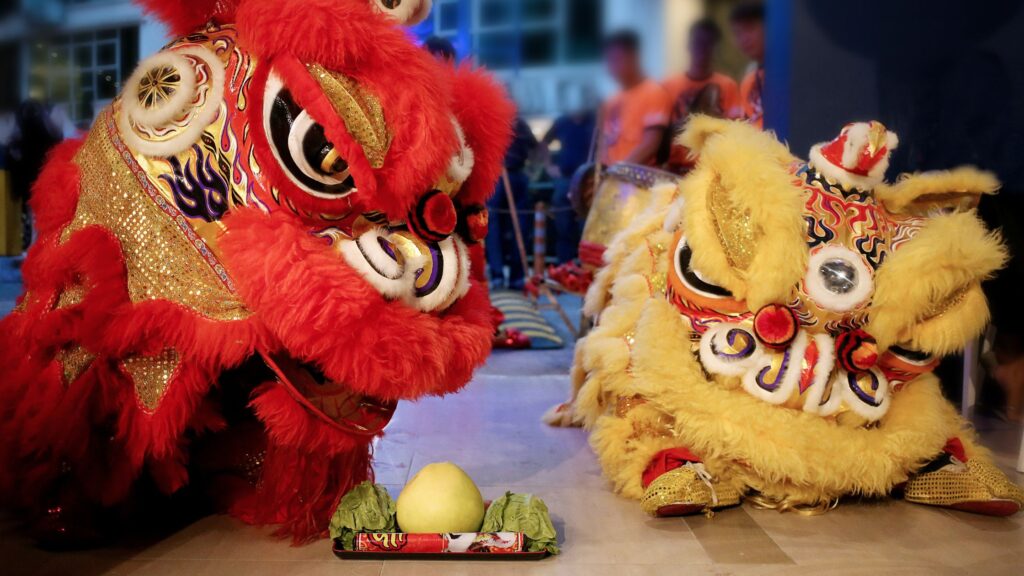
The Year of the Snake
2025, the Year of the Snake, symbolises wisdom, transformation, and healing. The Snake encourages personal growth and thoughtful decision-making, making it a great time to set goals for the year ahead. Incorporating Snake symbols in your home is also said to promote prosperity, particularly in business and relationships.
Chinese New Year continues to adapt to the modern world while preserving its deep-rooted traditions. Whether you’re hosting a reunion dinner at home, attending local events, or connecting with loved ones virtually, the Year of the Snake reminds us to embrace wisdom and transformation as we move forward into 2025.
For more insights into the Year of the Snake, read this overview.
If you need translation services for your business, contact us for a quote today!
Most Valuable Translator Awards 2024
We hope 2025 has started off well for you! As the New Year gets underway, it can only mean one thing… it’s time to announce our Most Valuable Translator Awards 2024!
Every January, we love taking a moment to show our appreciation for our amazing linguists by announcing our Most Valuable Translator Awards. These awards go to translators who’ve consistently gone the extra mile and have been incredibly hard working.
We can’t say enough how much we appreciate the hard work and dedication of all our freelance translators – they’re always quick to respond, consistently deliver excellent translations, and are a joy to work with. It’s such a privilege to collaborate with them, which makes it incredibly tough to pick just a few. Every single one of you gives your best, and we truly enjoy working with you. So, thank you to everyone!
That said, the Web-Translations team has been especially impressed by this group of linguists over the past year. Some have been absolute lifesavers on urgent projects, while others have consistently delivered top-notch work for our key client accounts. Their professionalism, communication skills, and translation expertise are outstanding and we would like to offer our thanks for their efforts.
Here are our most Valuable Translators for 2024….
So, please join us in congratulating the following 21 linguists (listed in alphabetical order):
- Ángela Arribas Ramírez
- Axel Couton
- Carles Hernandez
- Eduan Moraes
- Gisella Giarrusso
- Hanae Matsumura
- Ingrid Devanne
- Katrin Jarvis
- Laura Mussutto
- Lúcia Barbosa
- Marco Ramon
- Mercedes Acosta
- Nanda Weiland
- Pablo Montero Llano
- Rafael Molina Pulgar
- Thomas Carlsen
- Tine Wanning
- Ulrike Franz-Weall
- Yaotl Altan
- Yinli Zhuang
- Yookyeng Jeon
A heartfelt thank you to each and every one of you! We can’t wait to continue working with you and all our amazing linguists in the coming year. Here’s to another great year together—see you next January for the next Most Valuable Translator Awards!
Love,
The Web-Translations Team
To see our Most Valuable Translators from 2023, read here!
The Importance of Professional Subtitling for Your Business
In today’s fast-paced digital world, video content has become a cornerstone of communication for businesses across the globe. Whether it’s promotional material, educational resources, or entertainment, video is a powerful tool for reaching diverse audiences. But have you ever stopped to think about the role professional subtitling plays in making that content accessible and impactful?
Subtitles and captions are not just about adding text to a screen; they’re about bridging gaps – be it linguistic, cultural, or accessibility-related. Interestingly, many people use the terms ‘captions’ and ‘subtitles’ interchangeably, but they serve different purposes. So, what’s the difference, and why does it matter for your business? Let’s dive in.
Subtitles vs. Captions: What’s the Difference?

Subtitles are designed to translate spoken dialogue from one language to another. They’re primarily targeted at viewers who don’t understand the language being spoken. By breaking down language barriers, subtitles help businesses reach a global audience and make their content accessible to non-native speakers.
Captions, on the other hand, are more comprehensive. They provide a full transcription of all dialogue, along with descriptions of relevant sounds, such as background music or environmental noises. Captions are essential for hearing-impaired viewers and ensure inclusivity by conveying the full auditory experience in text form.
Understanding these distinctions is the first step in recognising their value for your business. If you have further queries, gov.uk has a clear guide to help you tell the difference.
Why Subtitles and Captions Are Crucial for Modern Businesses
Increased Accessibility
Accessibility is no longer optional; it’s a necessity. Captions ensure that individuals with hearing impairments can engage with your content, while subtitles allow you to connect with audiences who speak different languages. Inclusivity broadens your reach and helps build a diverse, loyal customer base.
Improved User Engagement
Subtitled and captioned videos aren’t just for accessibility – they’re also incredibly engaging. According to the BBC, studies show that viewers are more likely to watch a video to the end when it includes subtitles or captions. These features also allow users to consume content in sound-sensitive environments, such as libraries, offices, or public transport.
Enhanced SEO and Global Reach
According to LinkedIn, amongst other sources, adding captions improves your video’s discoverability on search engines, as the text can be indexed, making your content easier to find. Additionally, Subtitled videos are more accessible to international audiences, helping your business expand its reach across borders.
The Risks of Relying on Automated Subtitling and Captioning
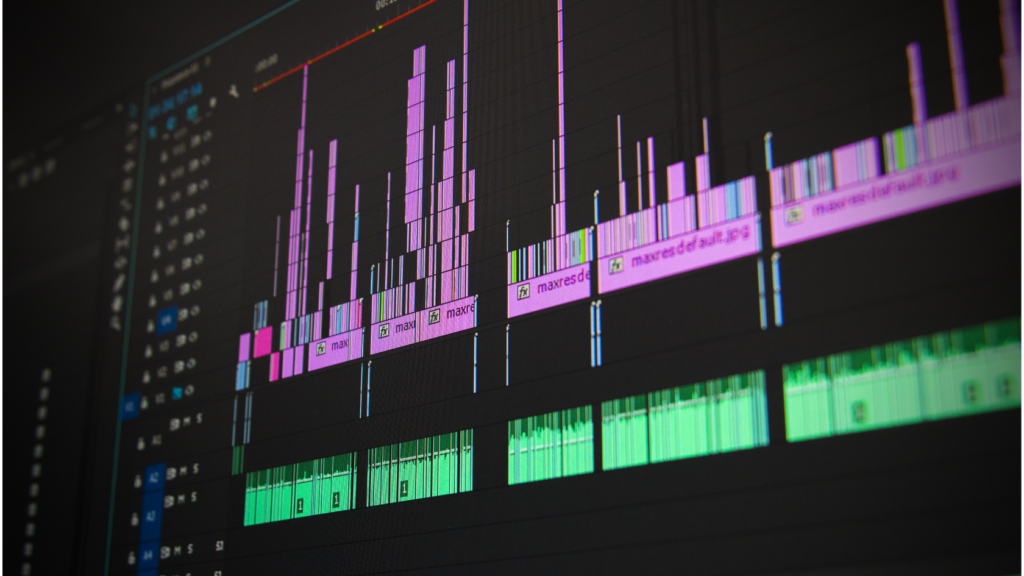
While technology has made auto-captioning tools readily available, they come with significant pitfalls. Automated systems often struggle with interpreting accents, differentiating homophones, or understanding contextual nuances. The result? Subtitles riddled with errors or captions that fail to accurately represent what’s being said.
This lack of accuracy can lead to poor viewer experiences, frustration, and even damage to your brand’s reputation. Imagine a marketing video with poorly translated subtitles that misrepresent your product or message – this can have serious consequences for your credibility.
Why Professional Subtitling Services Make All the Difference
Investing in professional subtitling and captioning services ensures your content is accurate, reliable, and polished. Here’s why it’s worth the investment:
Precision and Context
Professional subtitlers consider cultural nuances, idiomatic expressions, and the tone of your content. They don’t just translate words; they ensure the meaning and intent are preserved across languages.
Customisable Formatting
Different platforms have unique requirements for subtitling and captioning. Professionals tailor the formatting to suit your needs, ensuring your content looks and feels right no matter where it’s viewed.
Compliance with Accessibility Standards
Professionally crafted captions help your content meet legal accessibility requirements, such as WCAG. This guidance ensures that your business achieves its commitment to inclusivity.
Get Subtitles Done Right
In a world where accessibility and global reach are more important than ever, high-quality subtitles and captions are non-negotiable. They enhance user engagement, broaden your audience, and protect your brand’s reputation.
Rather than relying on error-prone automated tools, trust professionals to deliver subtitling and captioning services that meet the highest standards of accuracy and quality.
Ready to elevate your video content? Contact us today for a personalised quote, and let us help you create videos that speak to everyone, everywhere.
December Discount 2024
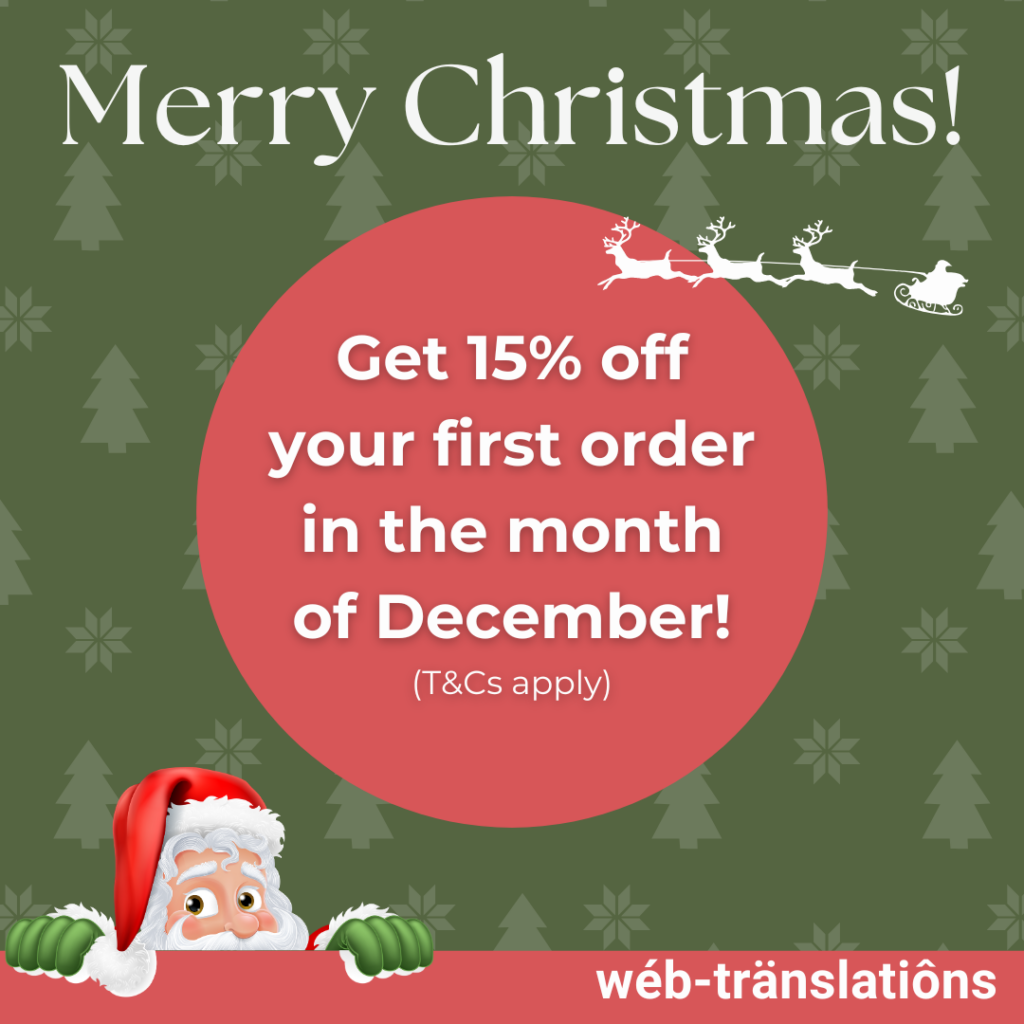
To celebrate the holiday season, we are offering a 15% December Discount on all translation projects! So, if you have some content that you’d like to translate, get in touch with us today for a free, no-obligation quote!
We can offer you:
- A Dedicated Project Manager
- Competitive Translation Rates
- Flexible Payment Terms
What’s more, we have a great track record working for clients in a wide range of industries. You can read all about our experience on our portfolio page! If you’d like to get to know us more, why not get in touch with our team to find out what we could do for you?
Terms:
- 15% discount will be applied to our standard rates of translation and proofreading
- Discounts will only be applied to projects exceeding our minimum charge of £60
- This discount cannot be applied to Pay-As-You-Go accounts
- This offer is restricted to the first order in December per client
- This offer cannot be combined with any other discount
- This offer will expire at 17:00 GMT, 31st December 2024
However, if your content isn’t ready for translation just yet, keep an eye out on our social media for future offers. Also, while you’re there, you can also check out our Christmas countdown – we have lots of fun content in store with our very own advent calendar!